Beatclub
Role
Product Designer
Timeline
6–8 months
Scope
End-to-end design — UX, UI, design system, prototyping
Contributors
Myself, Daniel Wasiluk, Gaurav Singh
Beatclub is the brain child of legendary producer Timbaland. A music discovery, collaboration, and licensing platform to connect bedroom producers with major labels, giving independent artists opportunities for licensing deals and collaborations with major labels. I worked closely with the two other designers on our team across timezones—handing off work daily to keep momentum for this fast-paced project.
The setup
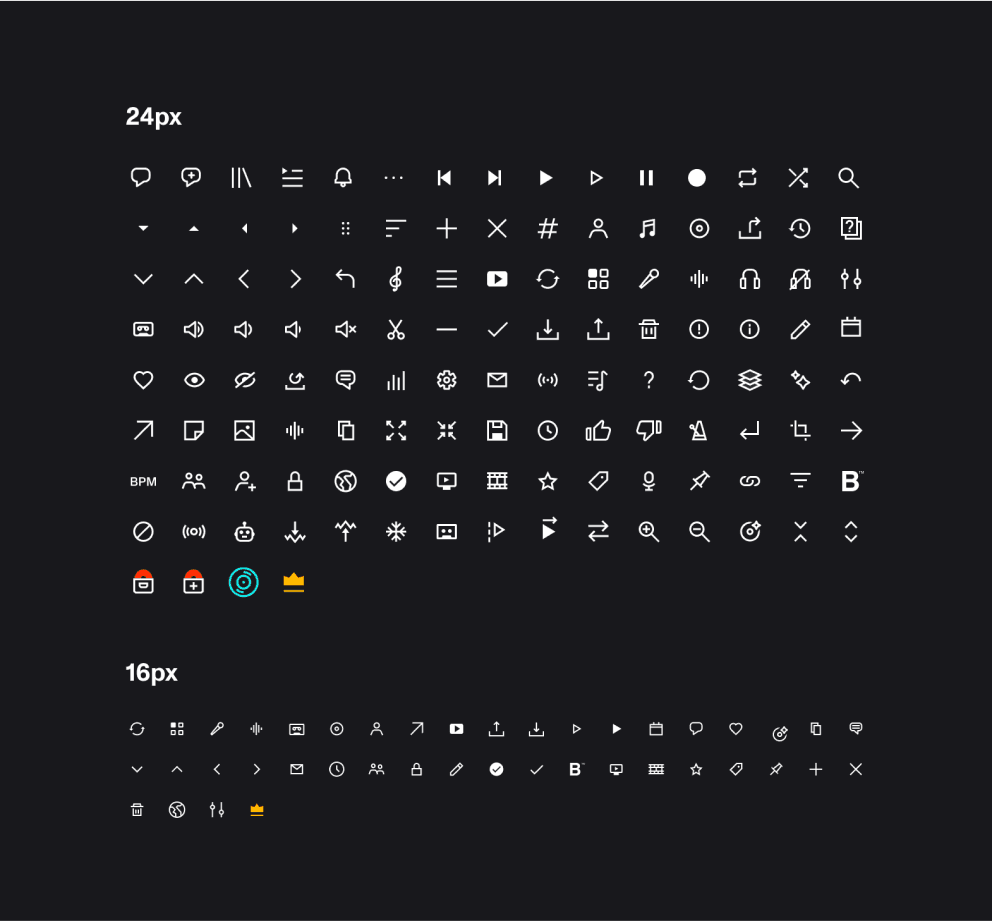
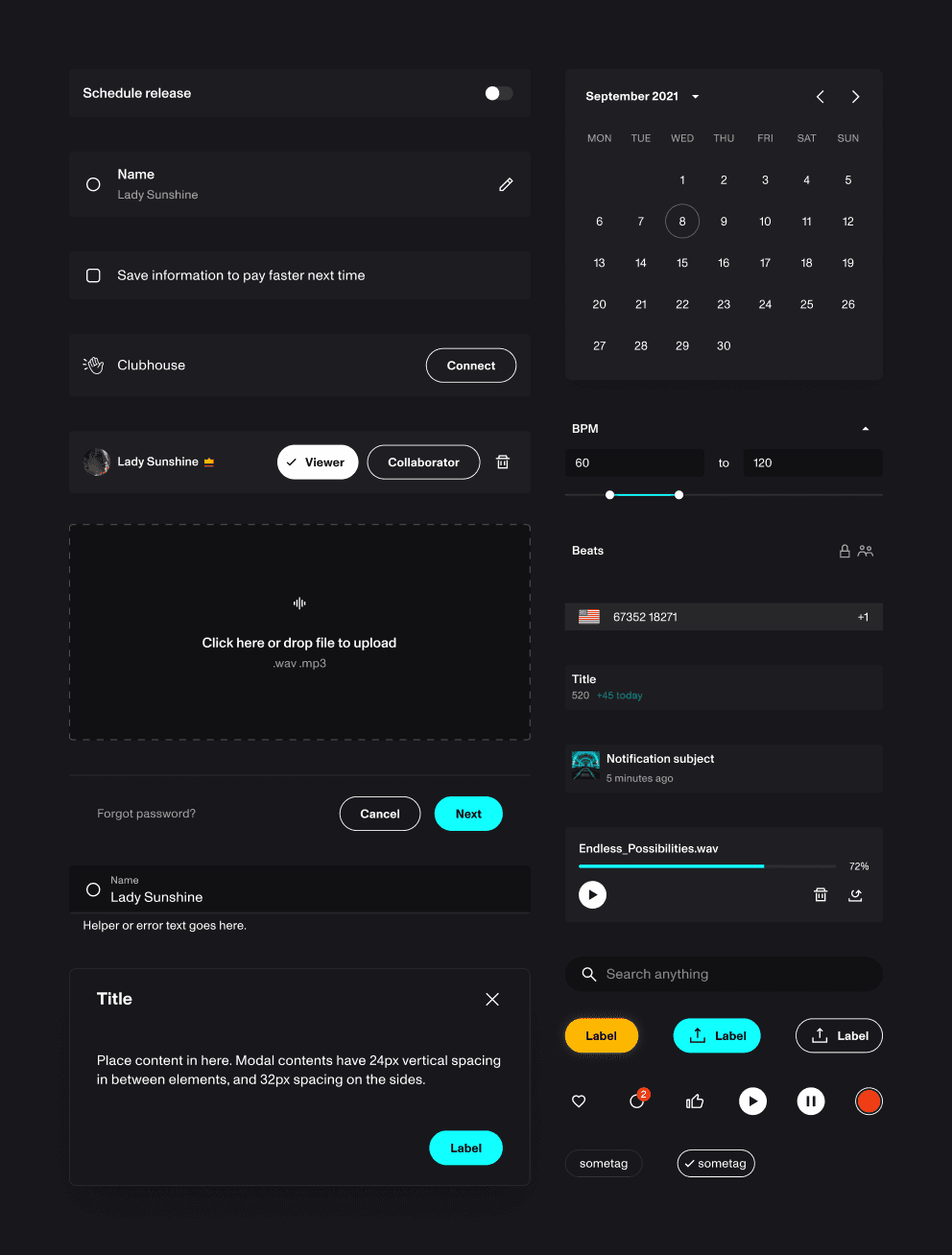
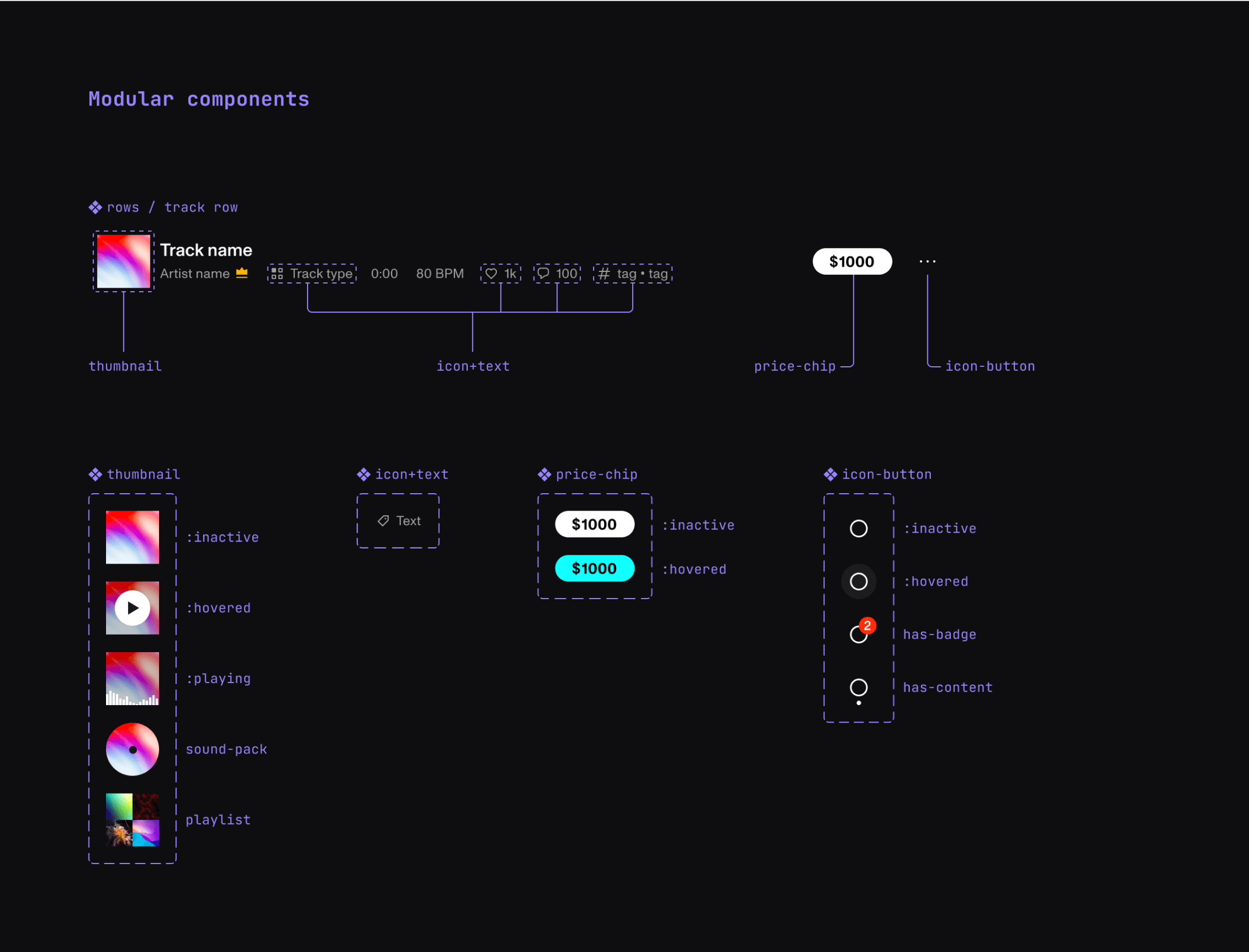
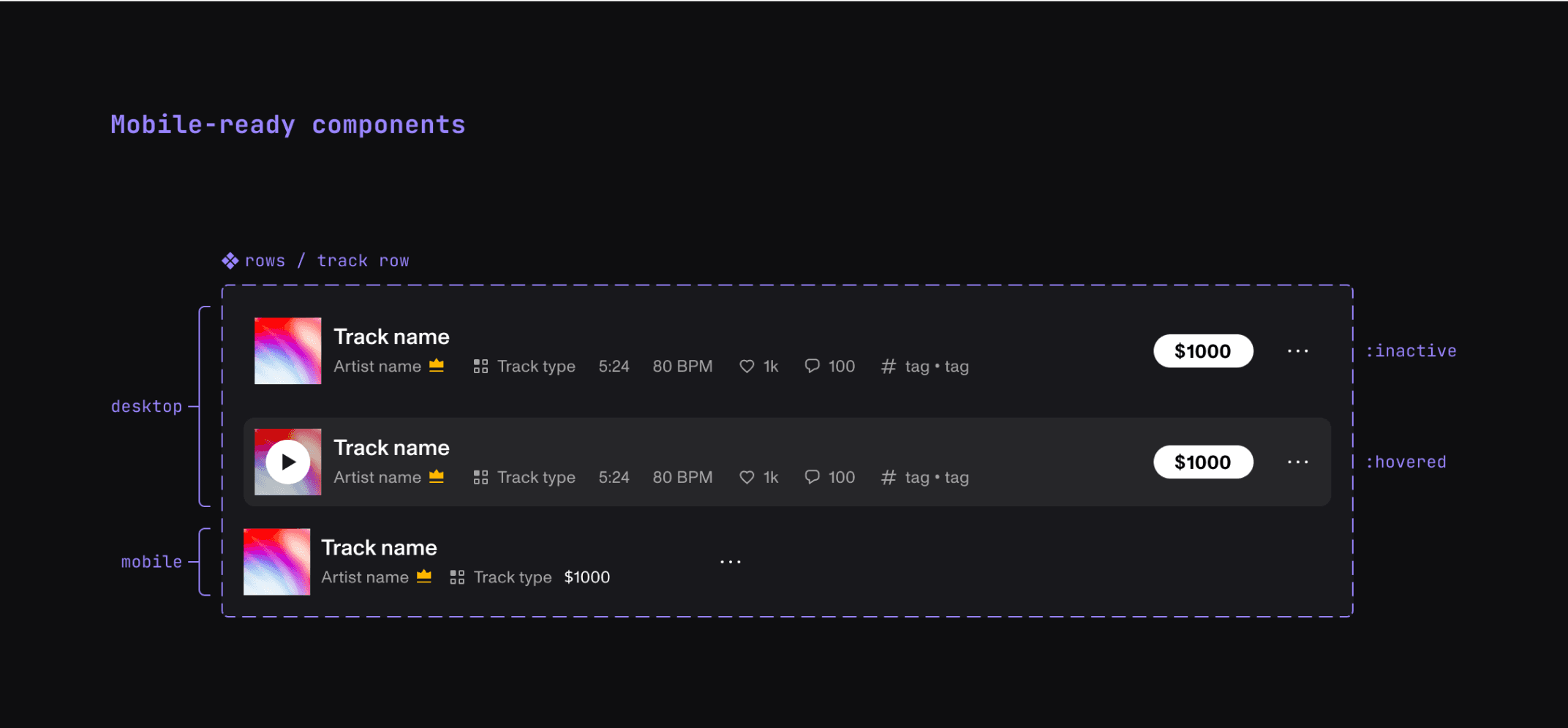
This was our first project using Figma as a team. I had lobbied hard for it over Adobe XD (different times…) so it was up to me to set us up for success. This meant creating a solid design system with best practices that the team could follow, and nailing down our prototyping approach. Luckily, we started just as Figma released their interactive components beta, so I reached out directly to get us access. We made extensive use of this feature throughout the project, which let us create a single, richly-functional prototype that felt close to a real product.
Play time
The the Beatclub music player was probably the most iterated feature in the product. It grew to do a lot more than just play tracks. Producers don't passively listen—they screen, clip, annotate, and test ideas fluidly. So we designed around their needs.
Track waveform
Scan a track's structure before you even hit play so you can find key moments like intros or drops.
Section markers
Creators add tags for chorus, hook, bridge, etc. Listeners jump to them or set a default start point.
BPM adjustment
A classic sampling technique — check if a track fits the energy of what you're working on.
Clip tool
Save and share a slice of a track, or loop it to jam along and develop an idea.
Timestamped notes
Jot down your thoughts anchored to specific moments.
Inline recording
Basically a mini audio workstation for capturing ideas without leaving the app.
Have your cake and eat it too
This is something I still think many platforms get wrong — a hard separation between search and filter. You search for something, then add some filters. Cool. Now what if I want to change my search term, or add another? Nope, any new search wipes everything and starts over.
We took a different approach: search terms are just another type of filter. As you type, the system surfaces known filter types, or will convert any string you type into a filter chip. Not quite what you were looking for? No problem — kill off some of those chips and try something else. This lets you quickly browse filters and build highly-custom queries without ever losing your place.
Additional work
Reflection
This project never shipped. Various factors conspired to stall the client's development, and the viability of any design can only really be judged when it meets its intended audience. Still, it was a valuable experience. Working closely with my team, we delivered high-quality, development-ready designs at a fast pace and established the foundations of a design system that went on to serve us well across many projects.
If I could do it again, I'd advocate harder for a more disciplined approach: MVP, test, refine, then expand. As an agency, your instinct is to please the client—but that can be taken too far. We see it across the industry all the time. How many shiny rebrands are actually executed as intended and still in use a year later?
This project helped teach me that there's a time and place for pragmatism and frank honesty in the design process. Dream big, sure—but everyone wants to see the work come to life. A well-timed reality check is often worth its weight in gold.